Demystify Dyslexia: Kids Afford to Learn
Demystify Dyslexia: Kids Afford to Learn
Demystify Dyslexia: Kids Afford to Learn
Client: Dyslexia Foundation of Nigeria (DFN)
I designed & prototyped an open-sourced, classroom
application for educators to support dyslexic students.
“After assessments at a training center, I discovered that my
son had dyslexia and heard that word for the very first time.
At the time, I was teaching at the University of Calabar.
Imagine a lecturer who did not know what dyslexia meant.”
“After assessments at a training center, I discovered that my
son had dyslexia and heard that word for the very first time.
At the time, I was teaching at the University of Calabar.
Imagine a lecturer who did not know what dyslexia meant.”
“After assessments at a training center, I discovered that my
son had dyslexia and heard that word for the very first time.
At the time, I was teaching at the University of Calabar.
Imagine a lecturer who did not know what dyslexia meant.”
Ben Arikpo - CEO, Dyslexia Foundation of Nigeria
Ben Arikpo - CEO, Dyslexia Foundation of Nigeria
Ben Arikpo - CEO, Dyslexia Foundation of Nigeria
Summary
Challenge: High Costs, Low Dyslexia Awareness
DFN educates dyslexic children at their training centers but…
DFN and students still face ongoing issues with their non-profit system:
❌ Lack of free, low-cost learning resources available 💸
❌ Lack of awareness or knowledge on dyslexia from teachers and parents 🤯
Solution: Learning App on Desktop—Offline & Open-sourced
Since laptops are the primary device, designing an MVP with these features
would be valuable for the school and its people.
Role: UX Designer in 6-person Team
In 8 weeks, I was challenged to design a region-specific learning app for teachers
to support dyslexic children.
Problem: Nonlocal Users
My team and I were not local to Nigeria—we would face difficulties contacting and researching users.
Despite constraints, what steps did I take to design for end-user needs and pain points?
Used existing local/nonlocal user research
Conducted local/nonlocal user interviews
Met weekly with DFN's stakeholder and SME
Analyzed competitors and market solutions
Problem: Nonlocal Users
My team and I were not local to Nigeria—we would face difficulties contacting and researching users.
Despite constraints, what steps did I take to design for end-user needs and pain points?
Used existing local/nonlocal user research
Conducted local/nonlocal user interviews
Met weekly with DFN's stakeholder and SME
Analyzed competitors and market solutions
Problem: Nonlocal Users
My team and I were not local to Nigeria—we would face difficulties contacting and researching users.
Despite constraints, what steps did I take to design for end-user needs and pain points?
Used existing local/nonlocal user research
Conducted local/nonlocal user interviews
Met weekly with DFN's stakeholder and SME
Analyzed competitors and market solutions
Having time constraints, I rapidly ideated with my team by
gathering data over 2 weeks that will determine the MVP features
Having time constraints, I rapidly ideated with my team by gathering data over 2 weeks that will determine MVP features
When I grouped this input data together by similarity, 3 themes emerged:
Metric Tracking, Student Customization, & User Retention
When I grouped this input data together by similarity,
3 themes emerged: Metric Tracking, Student Customization, & User Retention
These 3 themes or Jobs-to-be-Done (JTBD)
told me how & why teachers NEED the MVP
Next, I ideated on features with my team
that could resolve the user themes/JTBD
Lastly, I prioritized features by placing them
into a distinct effort:impact category—finalizing the MVP
Navigation Map
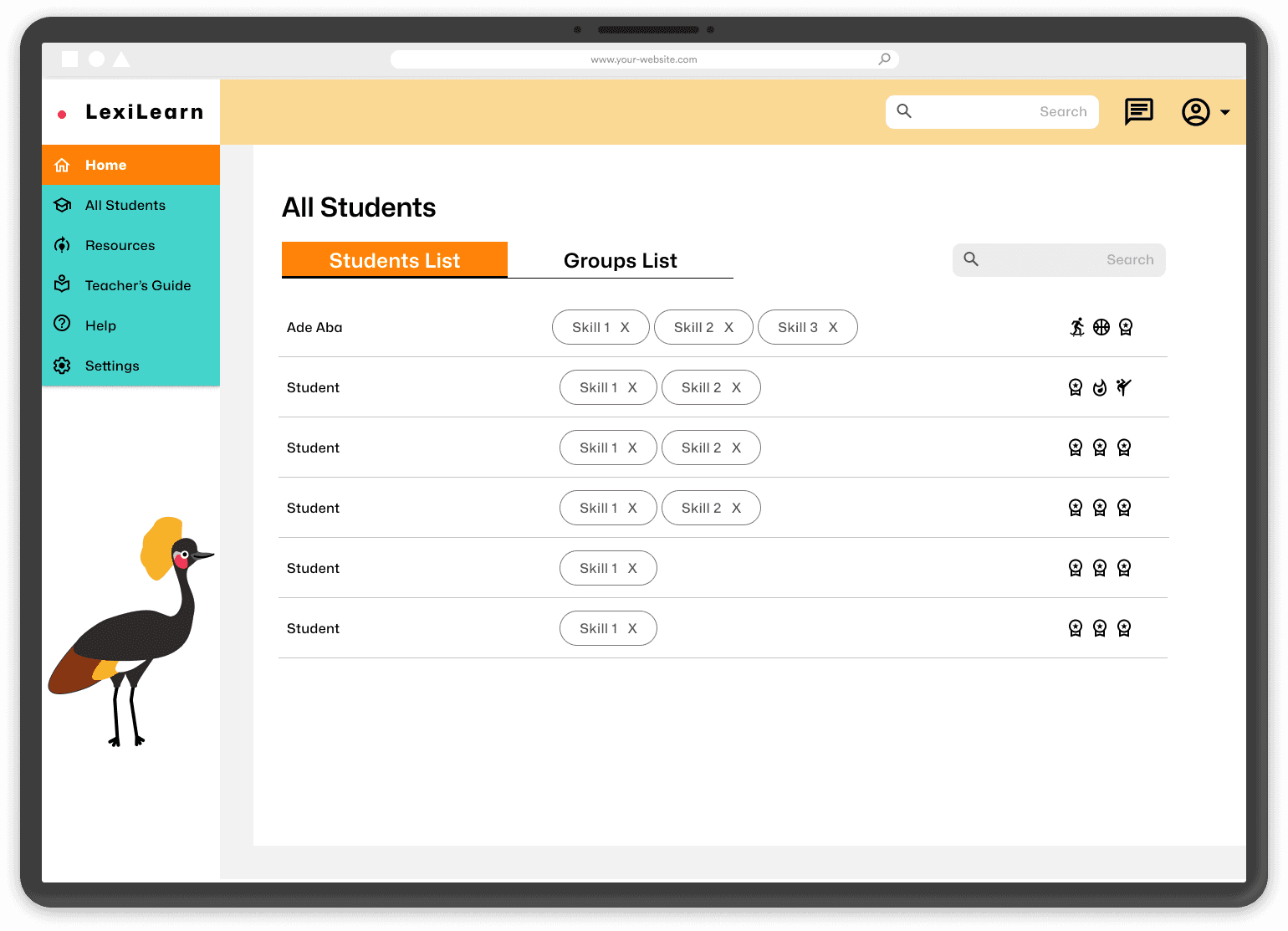
Now with a finalized list of screens from the MVP, I started sketching and exchanging design ideas.
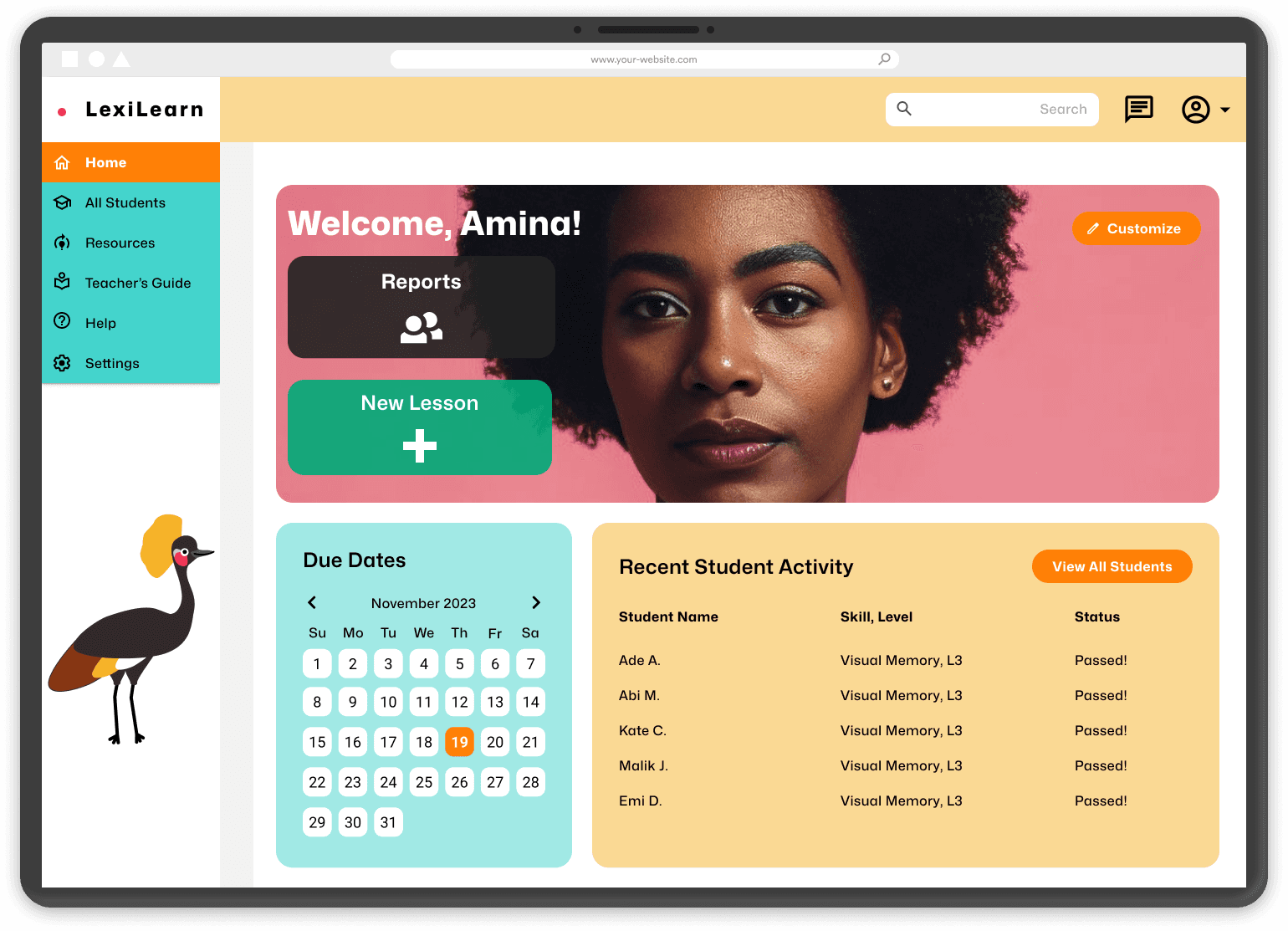
MVP: Dashboard
Now with a finalized list of screens from the MVP, I started sketching and exchanging design ideas.